Shopify & E-commerce Engineer · 5 years in e-commerce, 3 on Shopify
Shopify storefronts that convert. Shipped end to end, faster than you expected.
From the offer and product decision to cart, checkout, measurement and a safe release. Stores in the US, Canada and Europe. You hand over the storefront and receive a finished result, with the open questions already answered.
Not a contractor working to a spec. A partner working to a result.
01
The newest tooling, proven on live stores.
I work with everything that genuinely speeds up delivery today: I evaluate new tools, test them on real work, and keep only what survives a live project. One example is a Figma MCP and Claude Code pipeline I built eight months ago and have refined on production stores since. What a client gets is not an experiment but a proven process.
02
One person instead of a chain of handoffs.
The project does not wait on a designer, a manager, or a third-party review. Design refinements, asset generation, code, testing and release all pass through one pair of hands. When a task calls for a team, I assemble and lead it myself. I have done that before.
03
I improve the brief, not only deliver it.
I treat every project as a sales funnel, not a task list. If I see a more effective way to move conversion than the one in the brief, I propose it before the work starts. Experience across dozens of stores shows which solutions bring sales and which only create the appearance of activity.
04
I own the result all the way to release.
I find the cause, fix it, verify it and ship it to production without disturbing the content team's work. The complexity stays on my side. What reaches you is the finished result and a short summary: what changed and what to watch.
Tooling in practice
From a Figma frame to production, pixel for pixel.
New tools earn their place on my projects only after they prove themselves on real work. The clearest example is the pipeline I built on Figma MCP and Claude Code eight months ago and have refined on production stores since. A frame comes in through MCP, Claude Code drafts the section against the theme's own patterns, and every spacing and radius is checked back against the design. The hours a developer used to spend on routine markup now go elsewhere: into testing that everything works correctly, into finding what is not quite right, and into more considered engineering, including the decisions that directly affect how fast the site loads. Routine markup is a thing of the past, and with it the era of endless revision rounds, sections built wrong the first time, and slow pages, which in e-commerce cost both sales and metrics. Where that era continues, it continues with other developers. The focus has moved to the result: a store that runs fast and without failures, which is exactly where the freed-up time now goes.
Figma frame in through MCP
Draft against the theme's patterns
Checked back against the design
Verified in a clean browser
Shipped
Where it helps
Repository exploration
Implementation planning
Test drafting
Refactoring assistance
Documentation
Data transformation
Prototyping
API and workflow experimentation
Generated output ships only after it has passed the codebase, the platform constraints and a clean-room check.
Featured project
Engineering a conversion-focused Shopify storefront
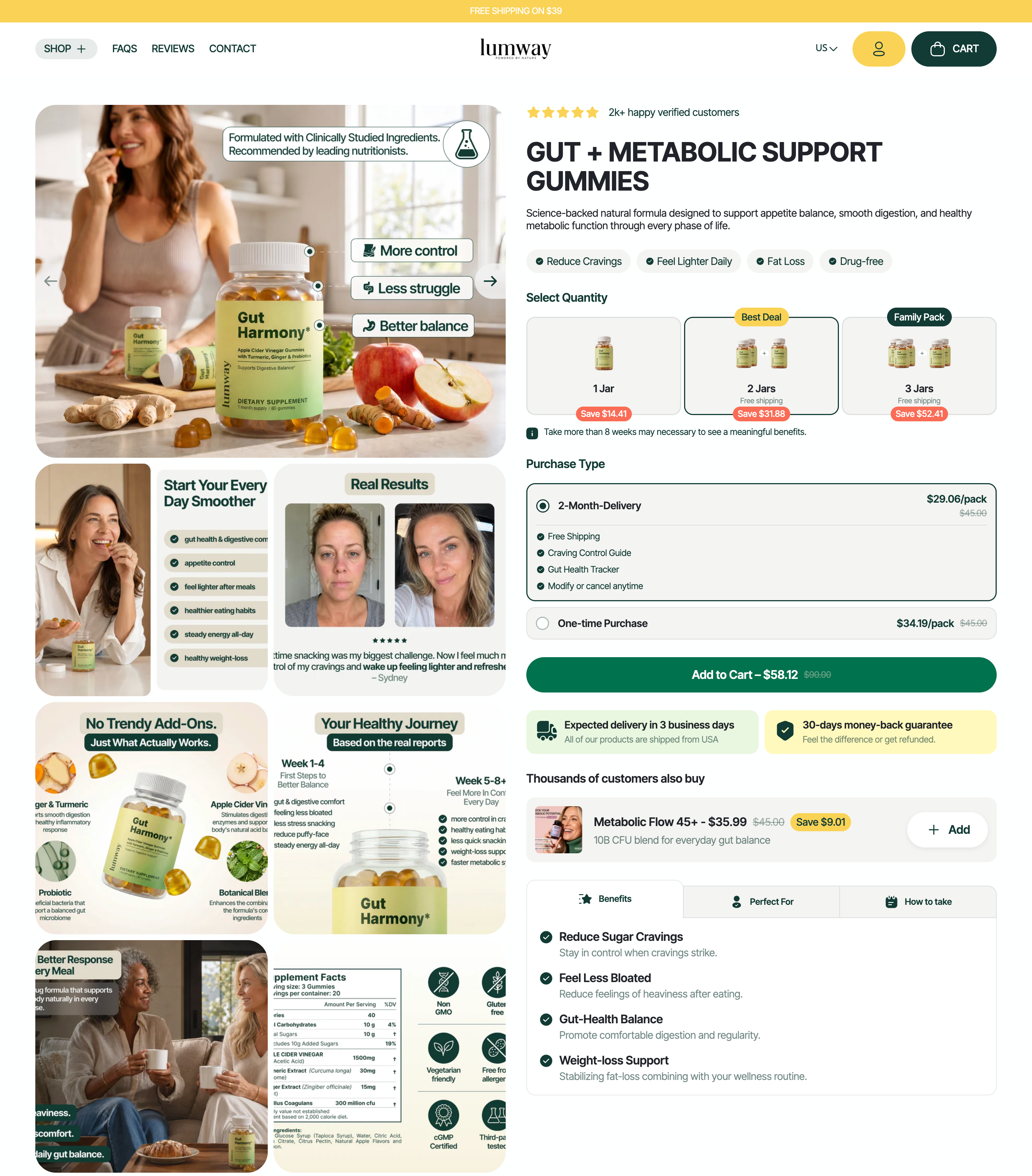
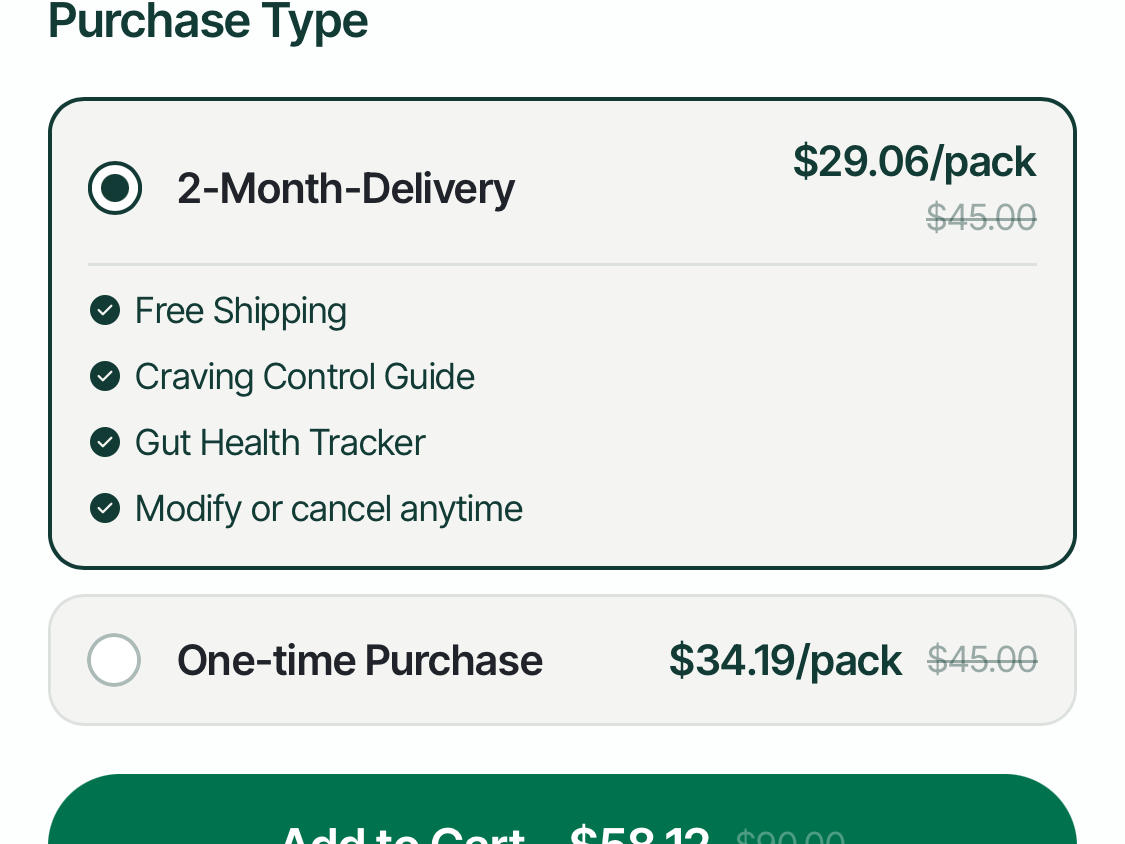
A US wellness supplements brand under NDA. I redesigned the subscription offer itself: which plans to run, what cadence each pack maps to, how the price is presented so it always matches what the customer is billed, and a buy box on native Selling Plans without a vendor widget. I then instrumented the funnel through Shopify's closed checkout with a custom Web Pixel and found the layout shift PageSpeed had missed. Sales in the eight weeks after release were 45% above the eight weeks before. Absolute figures remain with the brand.
6Deep dives
~130Sections
~180Snippets
80Templates
6Deep dives
~130Sections
~180Snippets
80Templates
6Deep dives
~130Sections
~180Snippets
80Templates
Reusable Liquid files across the theme and its templates, not a single page.
Analytics ArchitectureFunnel tracking through the closed checkout with a custom Web Pixel, including the duplicate Purchase events the marketing stack had been reporting.
Production-safe DeliveryA Git pipeline for a store the content team edits daily, with no content overwritten since it went in.
Loop → Recharge MigrationCutover timed against the billing calendar so no subscriber paid twice.
Different constraints. The same engineering discipline.
From a medically complex catalog to a disciplined premium-theme adaptation, each project required a different balance of custom experience, native Shopify behavior, and merchant control.
Everything a store needs to sell. From one person.
Themes of any complexity
From scratch, full redesigns, custom sections and templates, metafields on OS 2.0. Pixel-exact from Figma through the MCP pipeline.
Subscriptions and everything around the purchase
Recharge, Loop, native Selling Plans. Custom subscription widgets when the vendor solution does not fit the design or misstates the price. Subscriber migrations with no double charges. Bundles, packs with live savings math, upsells, cross-sells, quiz funnels, product finders, comparisons, any custom buy box. I know which of these actually lift conversion and which are merely fashionable, and I say so plainly.
Integrations and Shopify API
Subscription platforms, wholesale portals, POS, analytics, data migrations without loss.
Funnel and tracking
I see where a customer drops off the path to purchase and remove it. Pixels, events and conversions across the whole funnel, checkout included: GTM and DataLayer, GA4 ecommerce, Google Ads and Meta Pixel, Amplitude, Klaviyo. Custom Web Pixels where the standard ones stop. I can own this stack end to end.
Speed and Core Web Vitals on real users
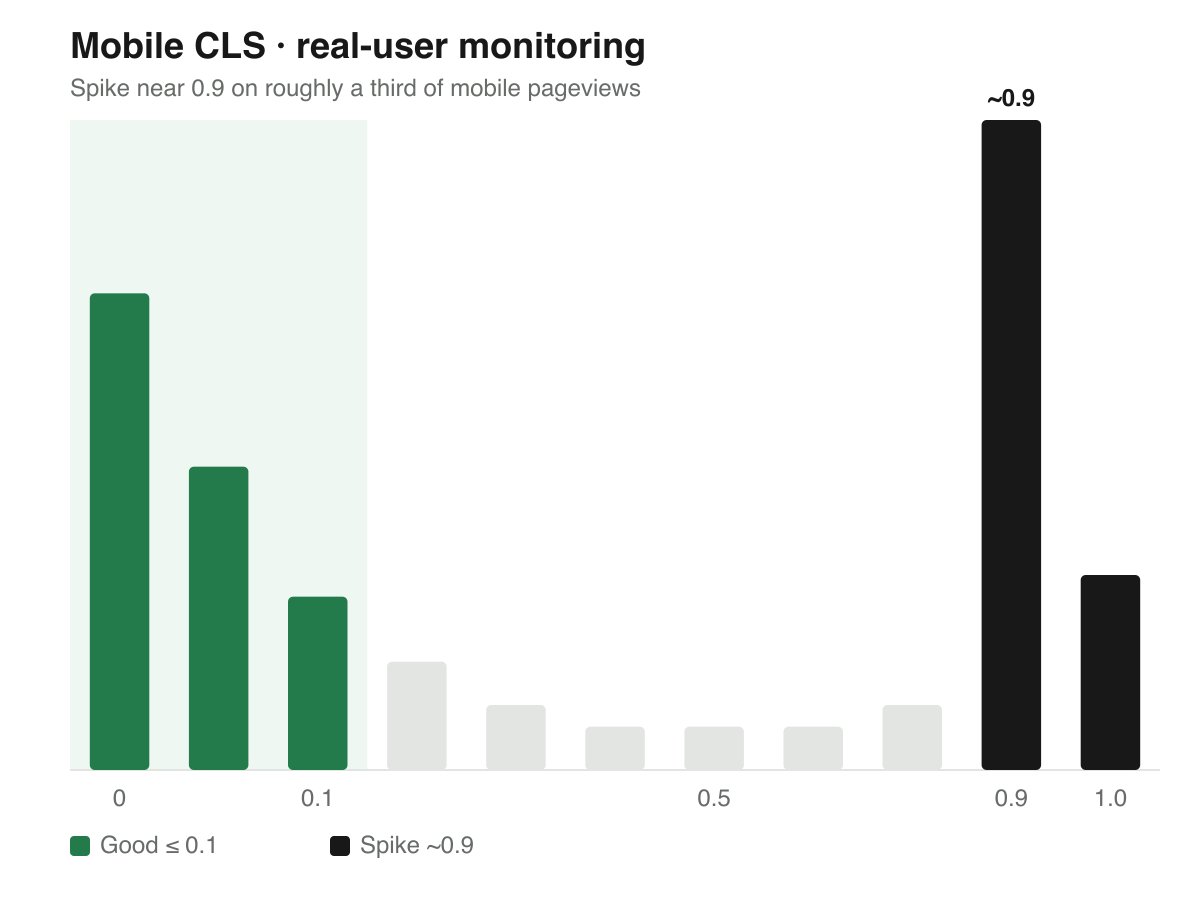
Measured on real users rather than in PageSpeed. My own field-data scripts show which metric degrades on which device, so the fix targets exactly that. On one store this surfaced a CLS of 0.9 for a third of mobile users that lab tools never saw, and brought it to zero.
Safe delivery to a live store
Git with no lost content and no downtime. Several developers and a content team in the Customizer? I set up the process: branches per theme, isolated revertable PRs, clear rules for shared files. No one overwrites anyone else's work.
Launch essentials
Policies, Markets, localization, legal pages. Everything a store needs to launch and stay up.
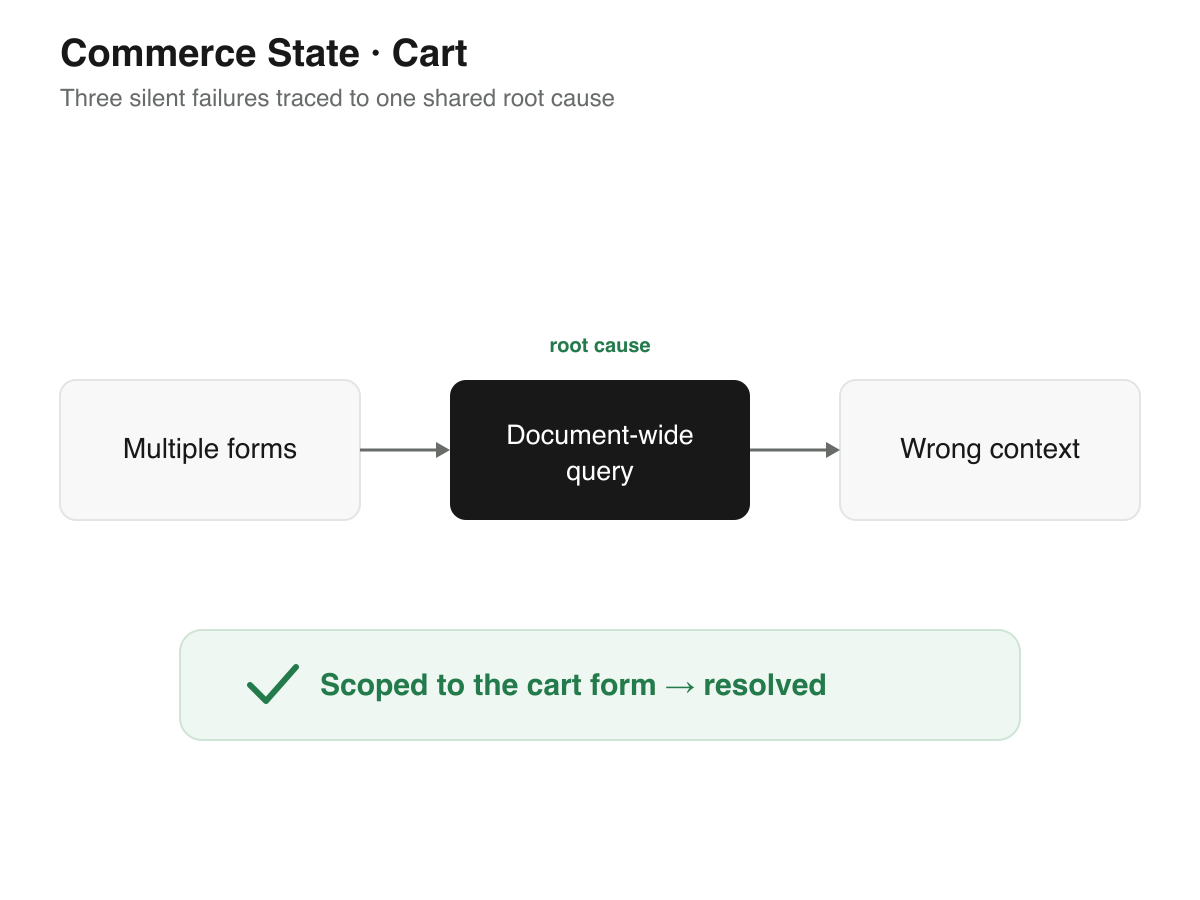
I work beyond the theme layer: mapping the purchase path, identifying where trust or commerce state breaks, adding the measurement needed to understand it, and changing the smallest part of the system that can improve it.
01
Find where the purchase path breaks
I trace the path from offer to order and find where the visible experience and commerce state stop matching.
A better storefront should not become a harder store to operate.
Hand over the storefront. Consider it handled.
Send the task and the goal. From there I read the code, take the work through release and verify it myself. English at B2, direct work with US clients, no intermediaries.